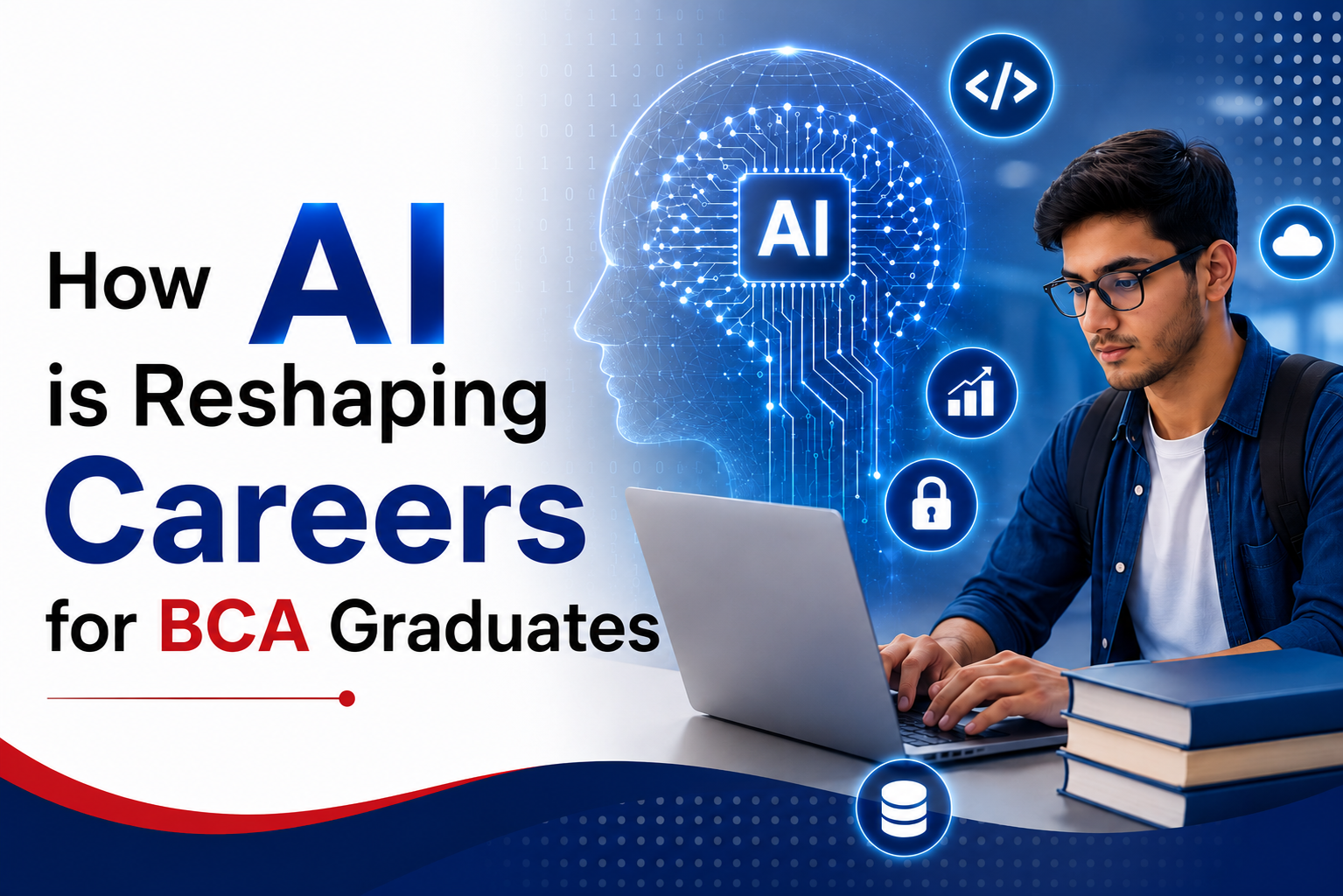
AI is no longer a futuristic concept but the reality that’s reshaping lives, industries, and the world. Computers and technology greatly influence the era we live in today. Digitalization has become the driving force behind societal growth, and gaining knowledge has become crucial to success. Whether it’s our day-to-day activities or professional tasks, all have been transformed due to technology and digitalization.
The emerging technologies have also created a pool of career possibilities for tech professionals in almost every field. Whether it’s education, healthcare, or entertainment, AI has reshaped every industry. The rapidly emerging technologies and their countless career possibilities have made IT one of the most preferred career choices in 2026.
Students are now more passionate about AI and other emerging technologies than ever. And the pool of career opportunities they offer is also a big reason. From AI to cybersecurity and cloud computing, various emerging technologies can be chosen for a successful career in today’s tech era.
AI or Artificial Intelligence is one of the most popular and influential technologies of recent times. From mimicking human intelligence to making every task easier, AI has reshaped every aspect of human life.
The most sought-after IT course to pursue in 2026 is BCA. The BCA course is a highly career-oriented program designed to equip students with the necessary skills and knowledge needed to excel in tech careers. For BCA graduates, AI has opened doors to numerous career possibilities that were even unimaginable a decade ago. We can say that AI has reshaped the learning, skills, and career trajectories for tech students.
If you are a BCA graduate wondering how AI can shape your career, you are in the right place. In this blog, we will explore how AI impacts careers after BCA and the best college for BCA you can choose to be career-ready in this AI era.
The Growing Demand for BCA Graduates With AI
At this time, AI has moved from research labs to real-world applications. From healthcare, finance, e-commerce, cybersecurity, to entertainment, all sectors are influenced by AI. This transformation means a great demand for tech professionals who can understand AI algorithms, machine learning models, data analytics, and software development.
Trends in BCA Careers with AI
Automating Repetitive Tasks– Companies have now adapted AI tools for repetitive tasks like data entry, customer support, and reporting. It requires developers to create and manage these systems.
Explore Programmes at DDUMC
Join 1000+ graduates who launched their careers through DDUMC's industry-aligned BBA, BCA, B.Ed & M.Ed programmes. Real curriculum, real faculty, real placements — see what fits you best.
Data-Driven Decision Making– AI models rely heavily on datasets. Professionals skilled in data analysis and machine learning are highly in demand for extracting insights and managing data.
AI in Software Development- AI features are now being integrated into applications. This helps to recommend engines to predictive analytics tools.
AI Career Options for BCA Graduates
AI has created numerous career possibilities for BCA graduates. These roles require a blend of traditional computer science knowledge and AI skills. Here are some of the most exciting career options after BCA.
AI Developer– AI developers build intelligence systems that learn from data. This role requires knowledge of Python, R, TensorFlow, and PyTorch, which are essential for creating machine learning models.
Data Analyst- With data becoming the backbone of every business, organizations are looking for professionals who can interpret and analyze complex data. A data analyst or data scientist is one of the most sought-after career options for BCA graduates, who enable them to offer actionable insights for businesses.
Robotics and Automation Specialist- AI is central to robotics and process automation. Skills and knowledge in AI-driven robotic process automation will improve their efficiency in sectors like manufacturing and logistics.
AI in Web and App Development- AI-driven applications have now become essential in e-commerce, healthcare, and entertainment. BCA graduates with knowledge of AI develop these applications that provide smart recommendations, personalized content, and predictive analytics.
Essential AI Skills for BCA Graduates
Here are some significant AI skills that BCA graduates should learn.
Programming languages: Python, R, Java, and SQL
Machine Learning & Deep Learning frameworks: TensorFlow, PyTorch, Keras, Scikit-learn
Data analytics tools: Excel, Tableau, Power BI, Hadoop
AI concepts: Neural networks, NLP, computer vision, reinforcement learning
Soft skills: Problem-solving, critical thinking, creativity, and adaptability
Which college is best for BCA in today’s AI era?
Nestled in the lush green cantonment area, DDUMC stands as the best BCA college in Meerut. The college is renowned for its world-class education and impeccable placements. BCA at DDUMC is a new-age program that offers updated skills and knowledge needed to thrive in today’s tech landscape.
DDUMC is also noted as the best placement college in Meerut, offering exciting placement career opportunities to BCA students in diverse sectors. Leading recruiters visit the college each year for a placement drive. This college is the ideal choice for anyone seeking a BCA college to excel in tech careers with AI.
Conclusion
AI is one of the most promising technologies, reshaping every aspect of human life. From healthcare to education, AI is now integrated in all industries, reshaping the way they operate. There is a huge demand for skilled professionals who can work with AI and other emerging technologies. BCA graduates with the right skills in AI can excel in tech careers.
FAQs
BCA graduates with no prior experience in machine learning should opt for AI?
Yes, there are many beginner-friendly courses in AI and machine learning that BCA graduates can pursue.
Which programming languages should a BCA student learn for AI?
Python is one of the most crucial programming languages for AI. Some other important languages include R, Java, and SQL for data handling and analytics.
In which industries can a BCA graduate work with AI skills?
Some industries in which BCA graduates can work with AI skills are healthcare, finance, retail, and logistics.
Admissions 2026 Open
Start Your BBA, BCA, B.Ed or M.Ed Journey at DDUMC
Meerut's trusted college for career-ready management & education programmes.